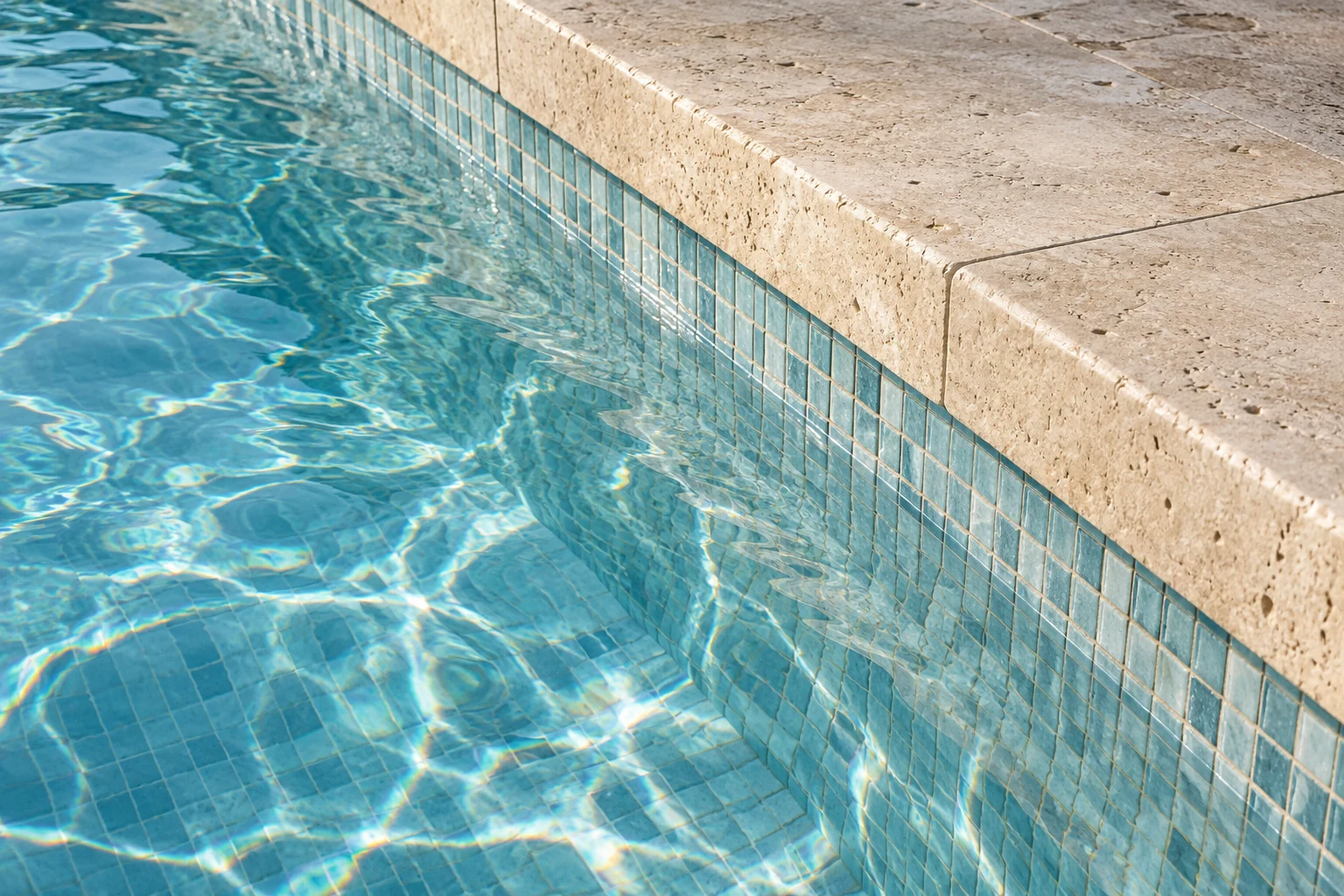
Choose the water colour, then the finish
A dry sample tells part of the story. Water depth, sunlight and the surrounding materials all influence the colour you will see.
Read articlePlan evening lighting from the places people will sit, walk and enter the water. Check coverage, glare and the visibility of steps before choosing colour effects. The pool lights and surrounding lights should work together, so the garden remains comfortable and easy to understand after dark.
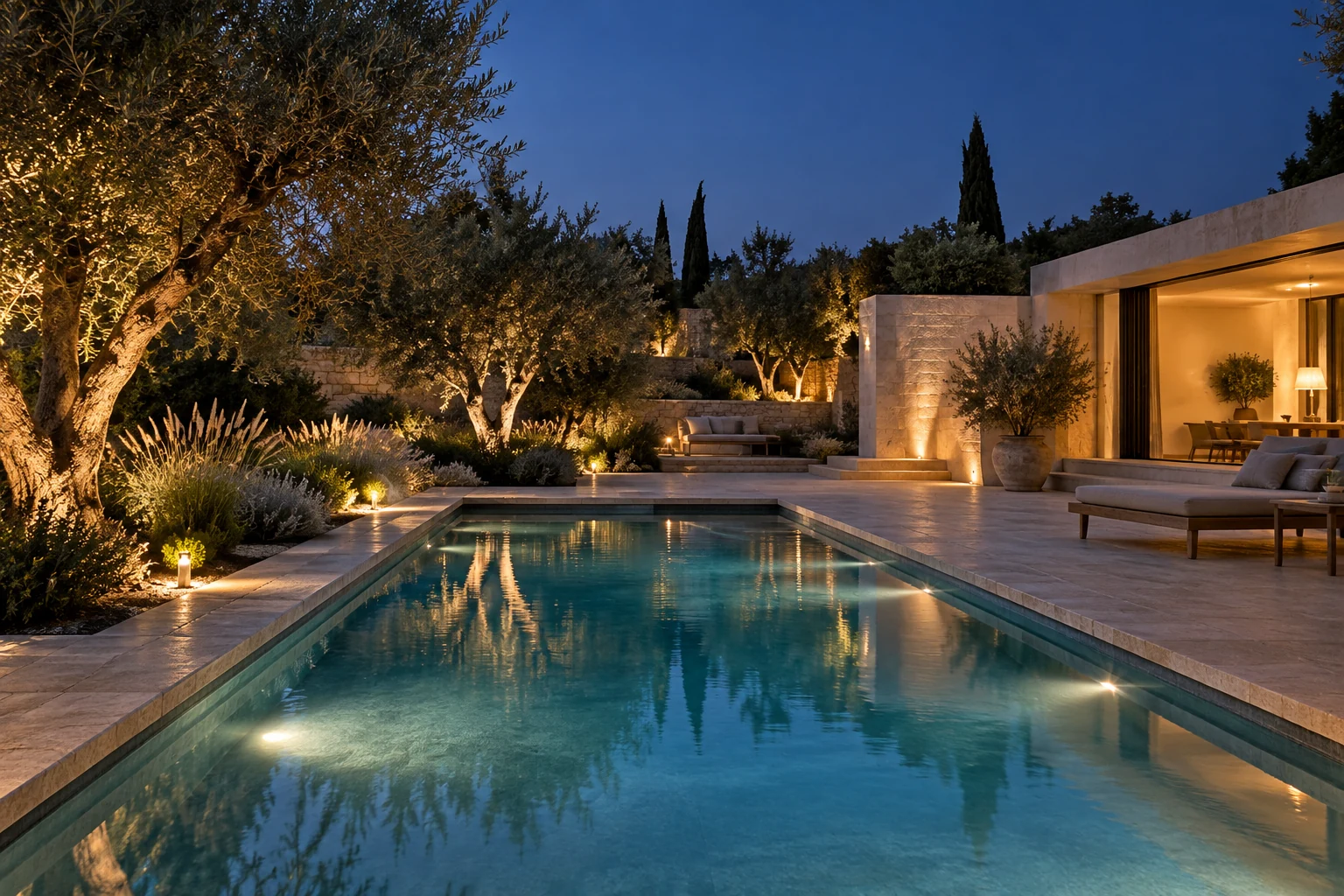
Mark the view from inside the house, the main seating area and the route to the pool. Ask the designer to assess the proposed lights from each position. A bright fitting aimed towards the dining table can become the first thing you notice, even when the water looks attractive.
Review glare and light spill as part of the layout. Beam direction, fixture position and the pool's geometry affect the result.
Identify the steps, shallow shelves and edges where people need to understand the shape of the pool. Ask how the lighting will reveal those areas. Include the path, gate and outdoor shower in the review, rather than ending the plan at the waterline.
Underwater lighting and path lighting do different jobs. Evaluate both with normal evening use in mind, including someone carrying towels or helping a child.
Start by reviewing a steady light setting that works with your finish and surrounding materials. Colour effects can be an extra option. They should not carry the whole design.
Ask to see the proposed light model in a comparable pool. The appearance depends on the light, its position, the finish, the depth and surrounding light. If several underwater lights are planned, check the manufacturer's guidance on mixing models before assuming they will match.
Use lighting made for its intended pool application, installed by a qualified professional to the manufacturer's instructions and local electrical requirements. Confirm the fixtures, controls and installation details before the electrical layout is finalised.
Then keep daily operation simple. Ask for clearly named settings and a demonstration of switching, timers and any dimming the equipment supports. Test the finished scheme after dark from all three original views, and have the installer address glare or poorly lit areas.
Walk the routes and sit in the main seats with the lights on. Judge the scheme where you will use it, at the time you will use it.
A dry sample tells part of the story. Water depth, sunlight and the surrounding materials all influence the colour you will see.
Read article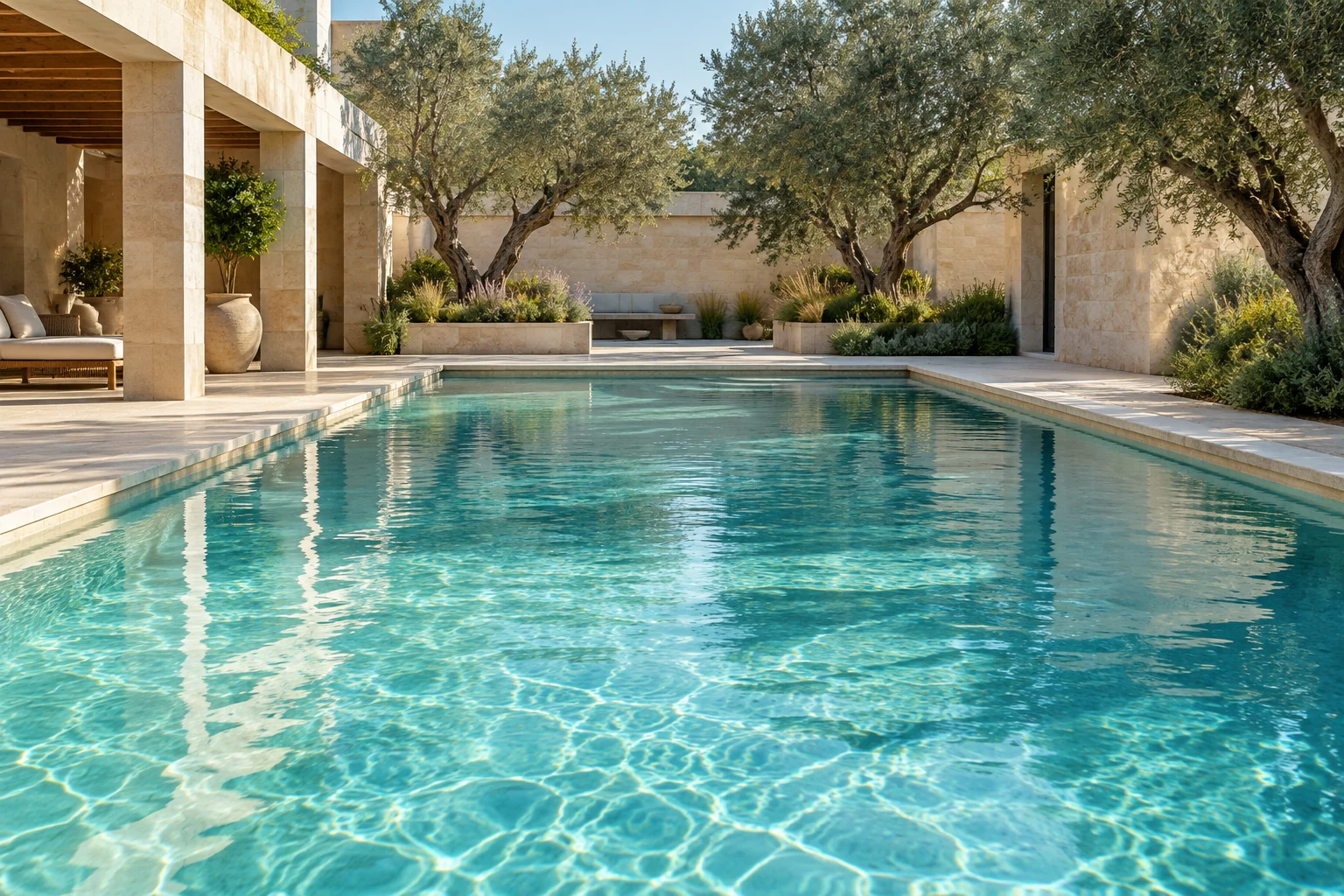
The shape comes later. Start with how you will swim, where you will sit, and what the pool will need to run well.
Read article