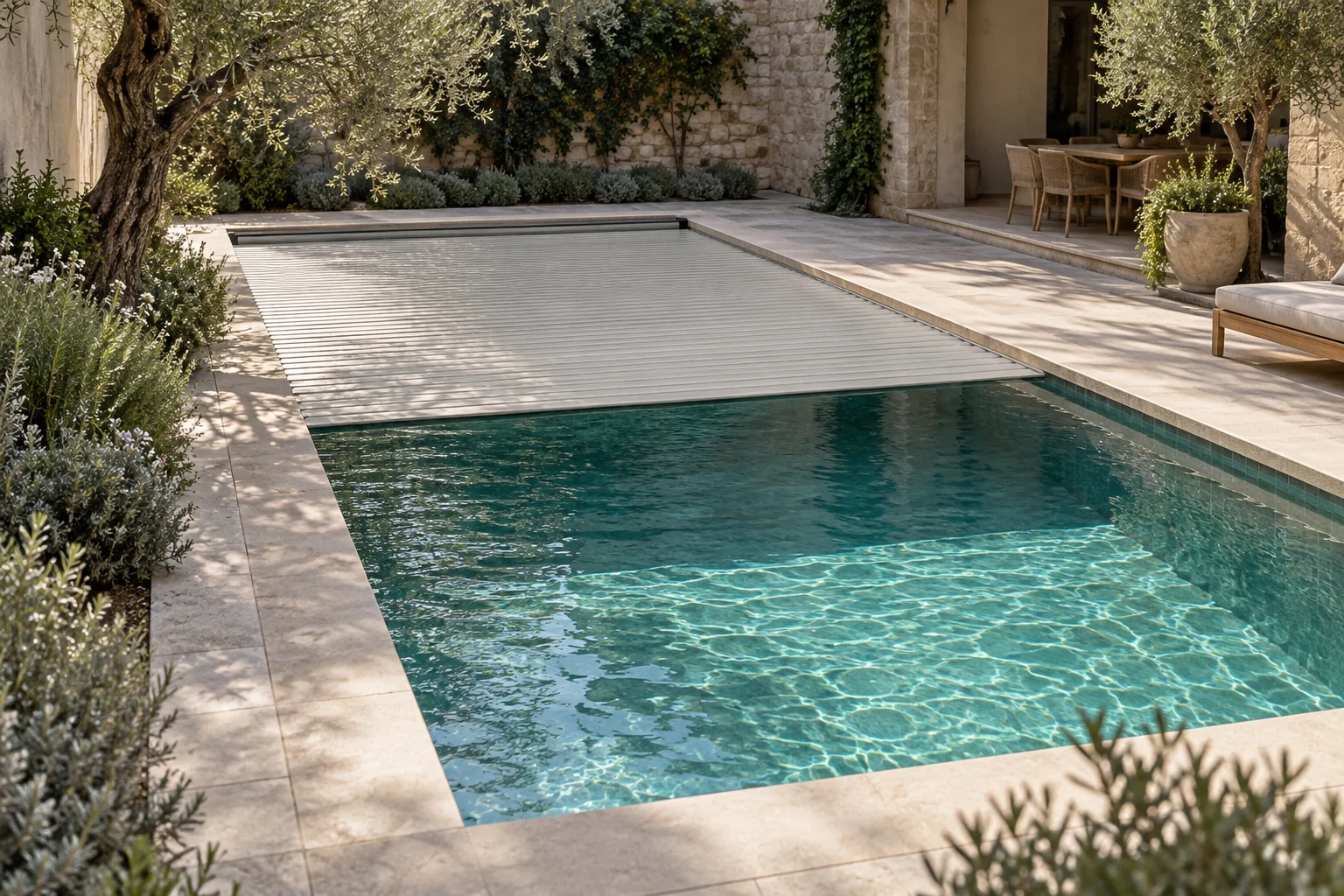
Lower running costs start with the cover and pump
Review evaporation, pump settings and maintenance before replacing equipment. Small changes to daily operation can reduce waste and make better use of what you own.
Read articleBefore choosing a shape, decide what the pool needs to do for your household. A useful first plan gives equal attention to swimming, the space around it, safety and maintenance. These six decisions give your designer a brief they can actually build from.
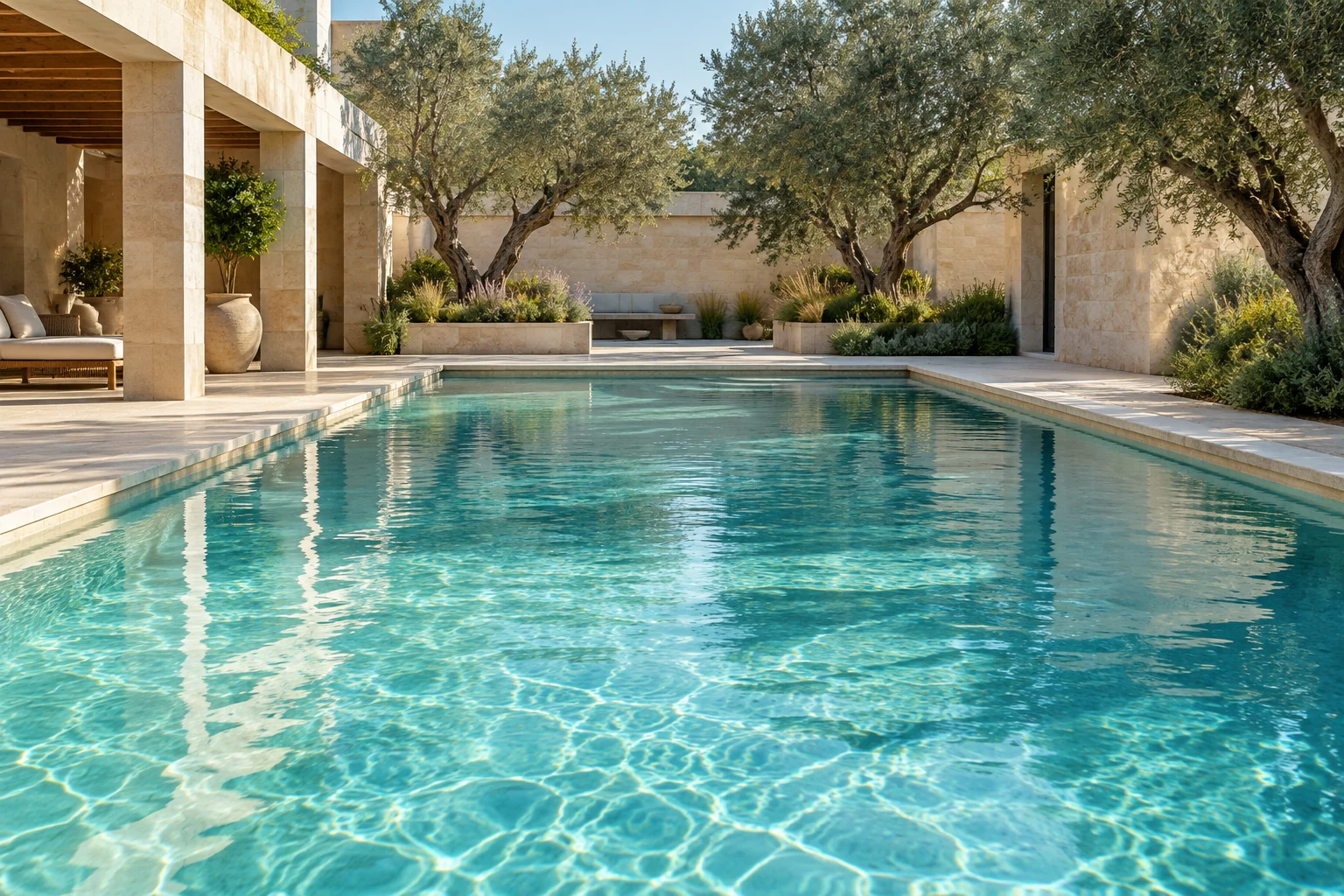
Regular laps, family play and a quick evening dip call for different layouts. Choose your main use first. Then list the secondary uses you want to fit around it. A large shallow shelf, for example, takes space that might otherwise become a swimming lane.
Draw the dining table, loungers, outdoor shower and walking routes at their real sizes. Check that a chair can move back without blocking the path. The water may be the centrepiece, but the surrounding space determines whether people enjoy spending time beside it.
Visit the proposed position in the morning, afternoon and evening. Note sun, shade, neighbouring windows and the view from inside the house. Ask the designer to assess access for construction, ground conditions and drainage before treating the layout as final.
Plan barriers and gates before the deck is designed. Keep climbable furniture away from barriers and preserve clear sightlines from supervising adults. Confirm local requirements with your designer. A barrier helps restrict access; close, continuous supervision remains essential whenever children are in or near the water.
Ask where the pump, filter and treatment equipment will sit, how they will be reached and what servicing involves. Review noise from nearby seating and bedrooms. Leave the access space the equipment manufacturer requires, including room to remove parts for maintenance.
Request a proposal that separates the pool, deck, equipment, electrical work, drainage and agreed extras. Ask which approvals and groundworks are included. Then request estimated running costs with their assumptions. Two quotes are only comparable when they cover the same work.
Take a site sketch, your three main priorities and a complete budget. Ask the designer to show how the first plan answers each one.
Review evaporation, pump settings and maintenance before replacing equipment. Small changes to daily operation can reduce waste and make better use of what you own.
Read article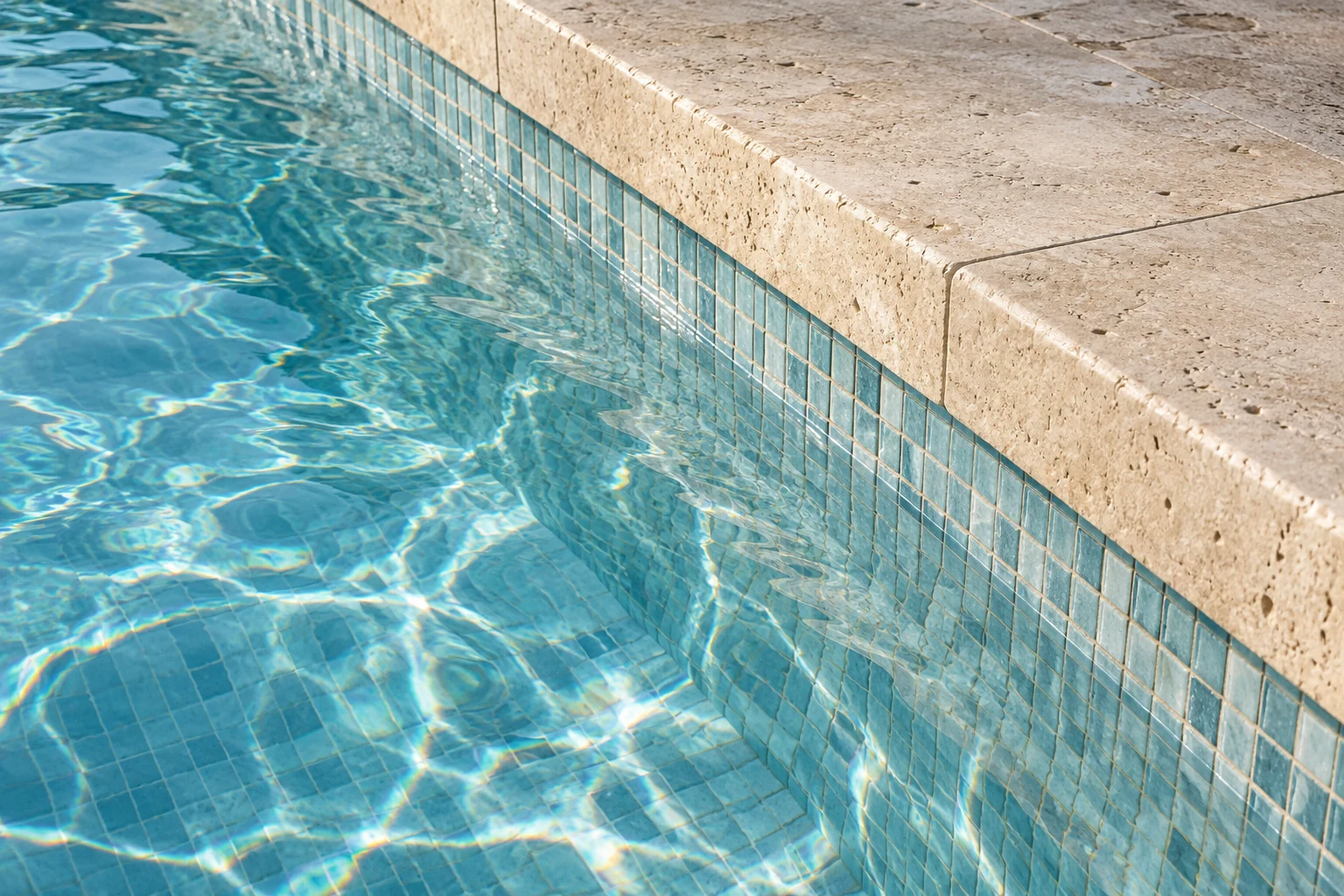
A dry sample tells part of the story. Water depth, sunlight and the surrounding materials all influence the colour you will see.
Read article