
Saltwater pools still use chlorine
Saltwater changes how chlorine reaches the pool. Understand the equipment, testing and replacement costs before deciding whether the system suits your routine.
Read articleWater can look inviting without having the correct disinfectant level or pH. Test it, record the readings and follow a care plan matched to your pool. Cleaning and equipment checks support that routine, but appearance alone cannot tell you whether the water is properly treated.
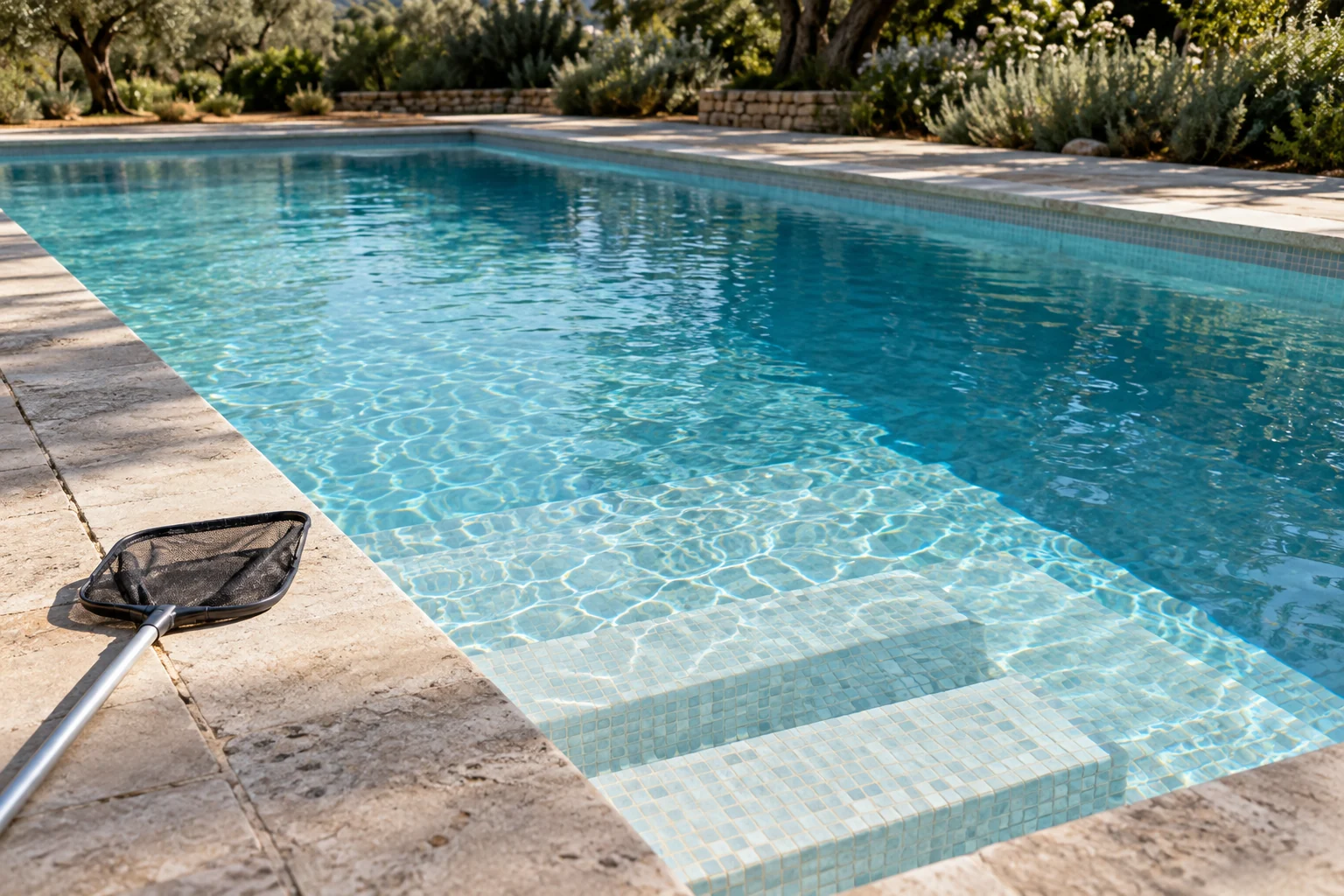
CDC guidance for home pools recommends testing chlorine and pH at least twice a day, with more frequent checks during heavy use. Follow the test kit manufacturer's directions and the treatment product's instructions. Ask your pool professional to explain the correct targets for your system.
Write down the date, time, readings and any treatment added. A short record helps you spot a recurring change and gives a service technician something more useful than 'the water looked fine yesterday'.
Remove visible debris and brush or vacuum as recommended for the pool finish. Keep accessible skimmer baskets clear, following the equipment instructions. An automatic cleaner can help with debris, but disinfectant and pH still need their own checks.
After a busy swimming day, repeat the checks required by your care plan. Do not assume that yesterday's readings describe today's water.
Have your technician show you the usual equipment readings and the signs that need attention. Filter pressure must be compared under the same operating conditions, particularly with a variable speed pump. Use the cleaning threshold for your specific filter.
Arrange filter servicing with a qualified professional. Filters operate under pressure, so removing a lid or clamp is not a casual cleaning task. An unfamiliar noise, leak or warning deserves a check before you change settings.
If test results are outside the required limits, keep swimmers out while you identify and correct the cause. Do the same when water becomes cloudy or you cannot verify its condition. Follow product instructions for treatment and reopening, and get professional help when the cause is unclear.
Store chemicals securely, keep them away from children and follow every label instruction when handling them. Never mix pool chemicals.
Record your target readings, testing method, equipment baseline and service contact. Make the routine easy to follow, including for anyone looking after the pool while you are away.
Saltwater changes how chlorine reaches the pool. Understand the equipment, testing and replacement costs before deciding whether the system suits your routine.
Read article
The shape comes later. Start with how you will swim, where you will sit, and what the pool will need to run well.
Read article